
English version follows
La danza della vita di Edvard Munch rappresenta una festa sulla riva del mare, in una notte di luna piena.
Al centro della scena è dipinta una coppia di ballerini che non sembra danzare, ma rimanere immobile, guardandosi negli occhi in una posa di reciproca e profonda comprensione. Sul lato sinistro della grande tela risalta una giovane donna vestita di bianco, sorridente, che avanza con passo leggero tendendo le braccia verso un gruppo di fiori dagli alti steli. Dalla parte opposta compare la stessa donna, ormai più anziana e vestita di nero: le mani incrociate in grembo, lo sguardo rivolto verso il basso, o forse con gli occhi chiusi, assorta nei propri pensieri; le labbra piegate in una smorfia che sembra esprimere amarezza. La stessa donna, raffigurata in due diverse età della vita, incarna diversi stati emotivi e le loro posture: da un lato la speranza della giovinezza e il passo fiducioso verso la felicità; dall'altro l'immobilità della riflessione, il ripiegarsi sul passato o forse soltanto la consapevolezza di quanto fugace sia il tempo. In mezzo, l’ombra di un amore.
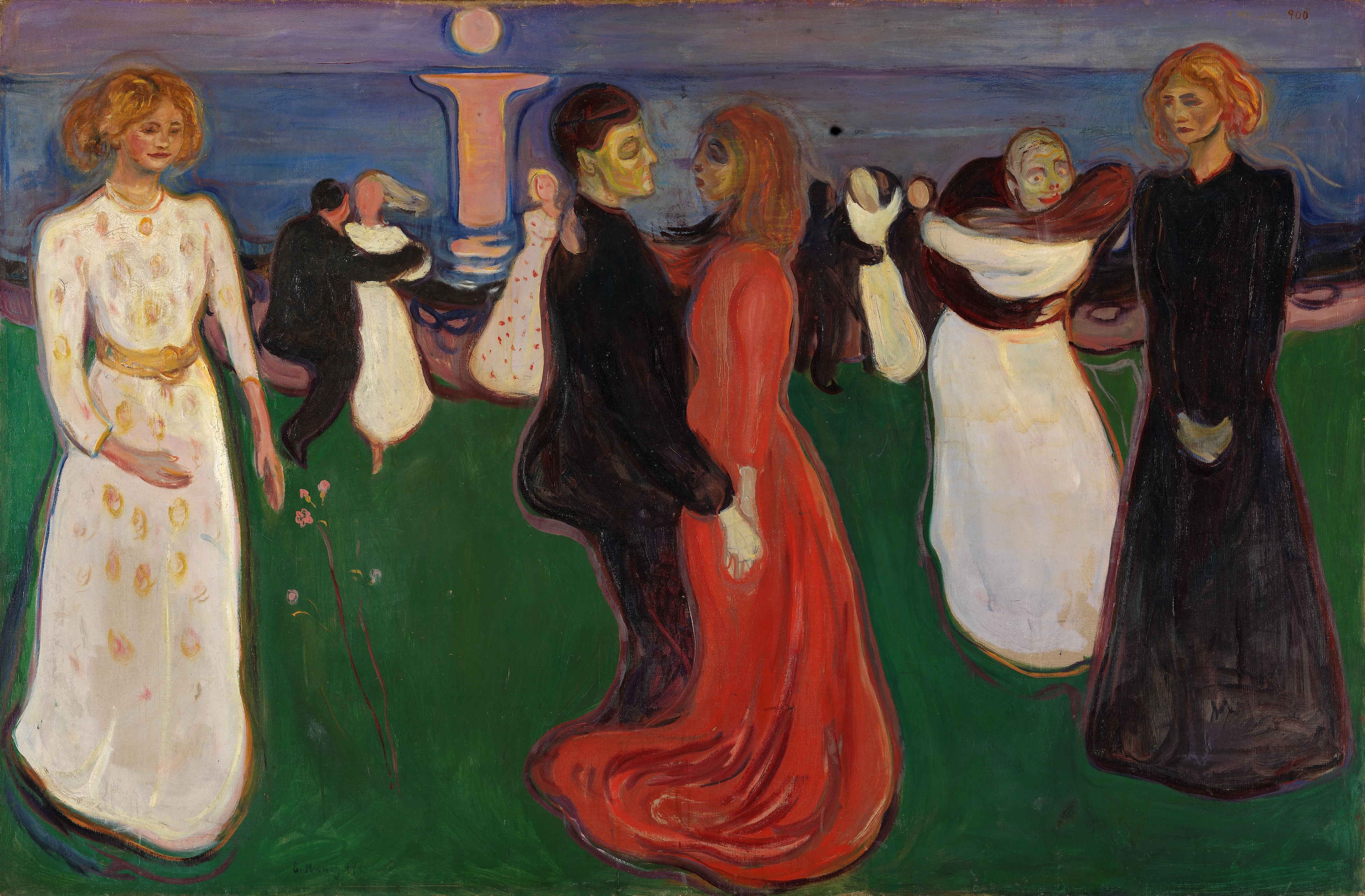
Le due figure, con al centro la coppia dei ballerini, costituiscono una totalità idealmente inscrivibile in un'ellisse e rappresentano lo svolgersi della vita. Sappiamo che nei due danzatori centrali il pittore ha voluto raffigurare sé stesso e il suo primo amore, la donna vestita di rosso. Un amore perduto, il ricordo di una passione, un sogno ricorrente. I colori degli abiti — bianco, rosso e nero — contrastano fra loro e scandiscono il ritmo interno del dipinto, una danza che coinvolge anche gli altri personaggi sullo sfondo: tre coppie che ballano, una donna sola e un uomo appena visibile che sembra danzare con una compagna. Le donne sono vestite di bianco, gli uomini di nero; le figure sono fluide, i tratti indefiniti. Solo un uomo, con il volto affondato tra le spalle della donna, esprime un desiderio quasi famelico, attraverso occhi spalancati che ricordano una maschera tragica.
La luna piena si staglia nel cielo. Il suo riflesso sull'acqua assume la forma di una figura dalle braccia spalancate. Ma la luna è lontana e anche il suo riflesso si infrange nell'azzurro cupo del mare, dove si distinguono due barche e due velieri. L'intera durata di una vita sembra così racchiusa in un giro di valzer, in una festa d'estate, in un effimero bagno di luce. Resta la nostalgia per quei mondi al di là del mare rimasti sconosciuti, per i viaggi che non abbiamo affrontato, per un amore che non realizzeremo, per una passione che non si riaccenderà.
Le due figure della stessa donna, in due diverse stagioni della vita, esprimono anche un'inalienabile solitudine: di ogni esperienza, felice o infelice, resta infine il confronto con noi stessi, con i nostri pensieri. La donna, sia quella raffigurata giovane sia quella dipinta anziana, appare distaccata dagli altri, racchiusa in sé stessa. Sulla festa aleggia così l'ombra della morte, dell'allegria effimera, della musica che si spegne, della danza che si arresta, dell'amore che si trasforma in un ricordo sbiadito. Le figure danzano al ritmo di una musica muta, che assorbe in un unico vortice persone e cose. La danza della vita è una danza di ombre che si sfiorano, si incontrano per un solo istante, si abbracciano e poi svaniscono nel fluire inarrestabile del tempo. Ed è proprio perché è così effimera che la vita va vissuta in ogni istante che ci è concesso.
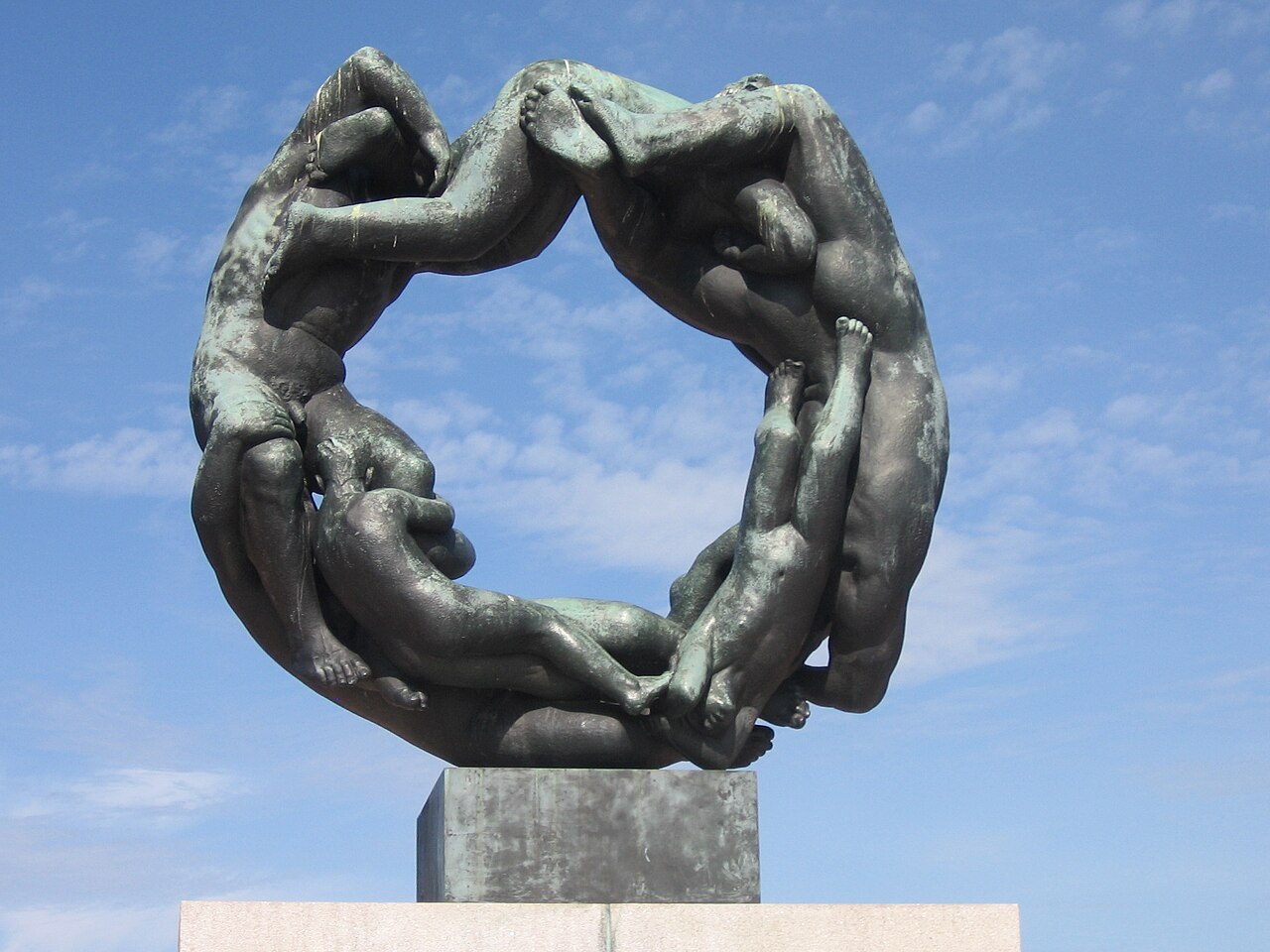
Non c’è dubbio che Alan Lucien Øyen, scrittore, regista e coreografo norvegese, conosca bene La danza della vita e l’abbia osservata molte volte a Oslo, la sua città, nel luminoso Museo dalle pareti di vetro, affacciato sul fiordo, dedicato a Munch. Non vi è dubbio che abbia passeggiato spesso nel parco dello scultore Gustav Vigeland, soffermandosi tra le coreografie delle sue statue e davanti a quella intitolata La ruota della vita. La ruota è simbolo dell’eternità e Vigeland la concepisce come una ghirlanda rotante di donne, uomini e bambini che si tengono per mano, in un abbraccio destinato a durare per sempre. La scultura riassume l’intero tema del parco: la riflessione sul viaggio dell’esistenza, dalla culla alla tomba, attraverso la gioia e il dolore, i sogni, la fantasia, la speranza e i desideri, realizzati o irrealizzati.
Non ho motivo di ritenere che Øyen abbia tratto direttamente ispirazione dall’una o dall’altra opera per la sua Antigone, ispirata, naturalmente, alla tragedia di Sofocle. Lo spettacolo condivide tuttavia con il dipinto di Munch la centralità di una figura femminile che si sdoppia e osserva la danza della vita altrui da prospettive diverse; con la monumentale scultura di Vigeland, invece, condivide l’abbraccio circolare dei danzatori che apre e insieme suggella uno spettacolo intenso e coinvolgente sulle note di I wanted to leave di Syml, i cui echi continuano a risuonare nel cuore degli spettatori molto tempo dopo la conclusione della rappresentazione. (Per averne solo un’idea, ecco il trailer: https://www.youtube.com/watch?v=THJp15XjwMo)
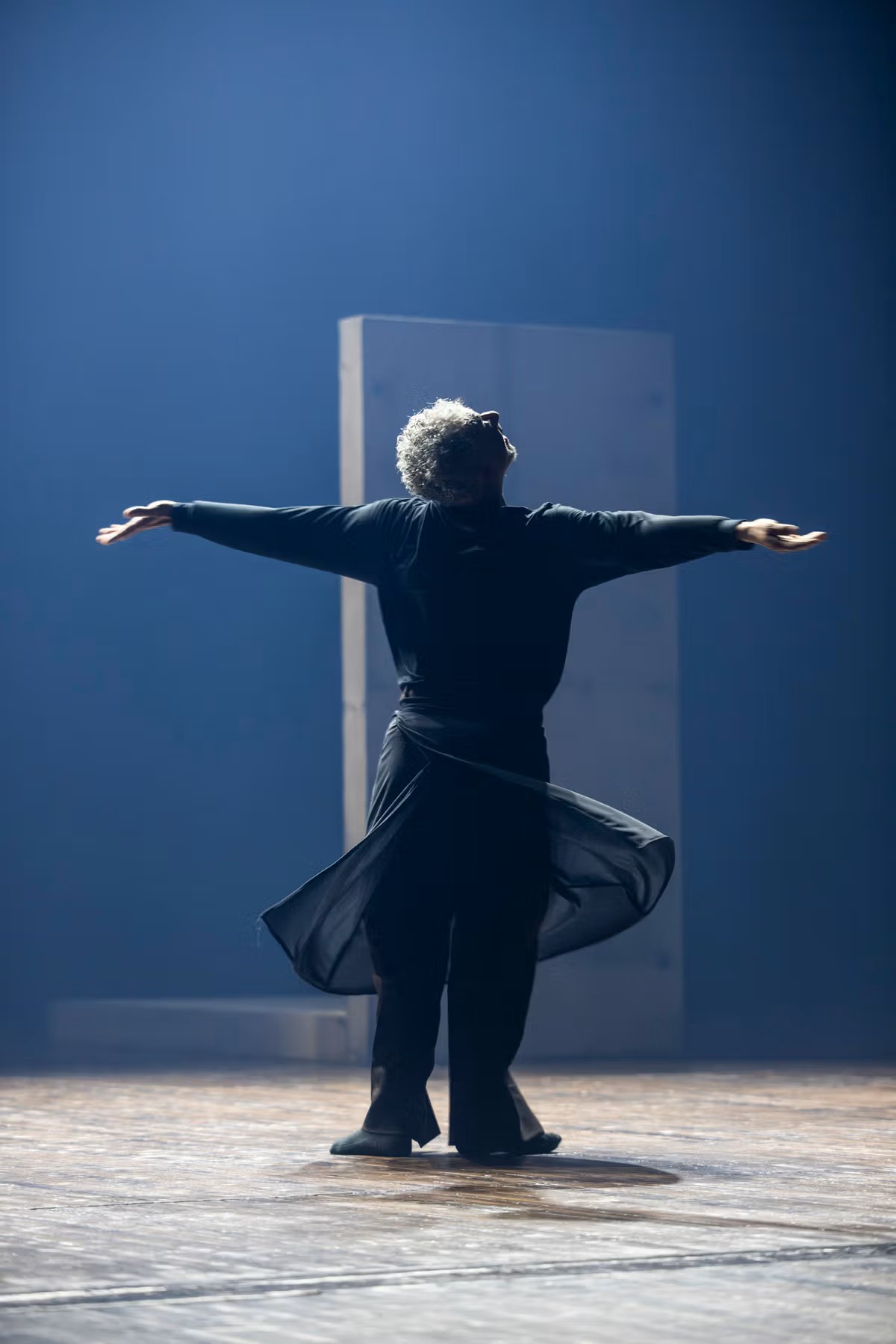
In una delle prime scene dello spettacolo, infatti, i nove interpreti danzano lentamente in cerchio: i loro movimenti sembrano leggeri e spontanei, quasi sospesi nell’aria. La stessa danza ritorna al termine delle tre ore di rappresentazione, trasformandosi in una metafora della condizione umana, sospesa fra fragilità e disciplina, libertà espressiva e costrizione, desiderio e necessità, legami liberamente scelti e vincoli imposti, ineluttabilità della perdita e volontà di lasciar andare, aspettativa del nuovo e nostalgia di ciò che si è stati. La ruota della vita.
Lo spettacolo è diviso in due parti: la prima resta più saldamente ancorata al mito antico, la seconda ne amplifica i significati nell’esperienza di ognuno di noi. L’Antigone di Øyen è un flusso continuo di movimenti, gesti, parole, che attraversa le grandi questioni dell’esistenza umana, la morte, l’amore, la violenza.
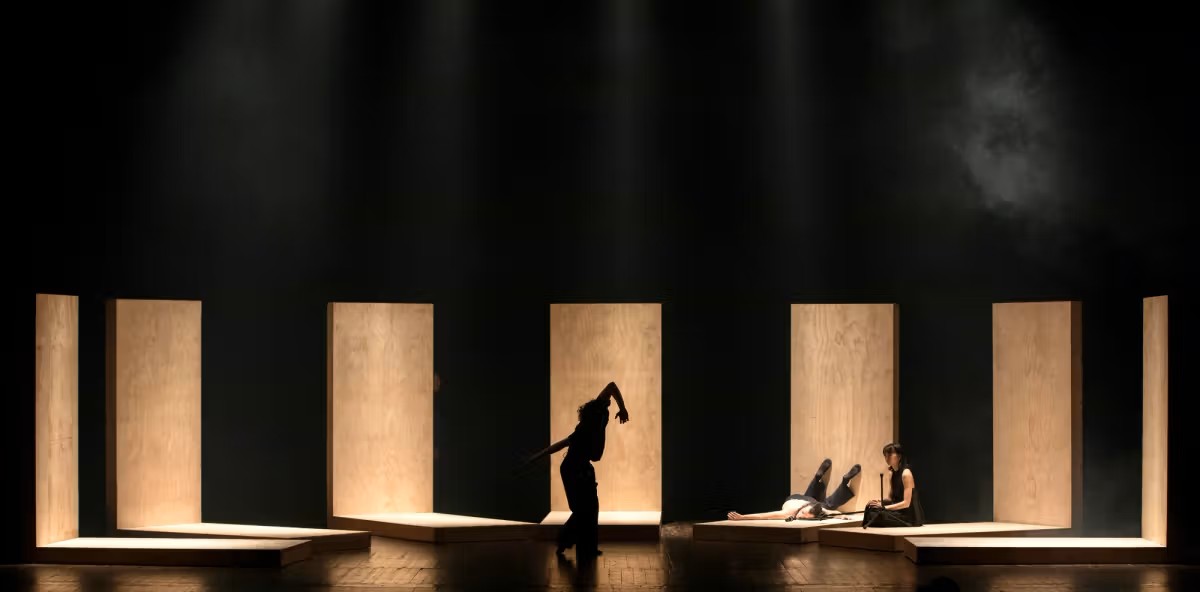
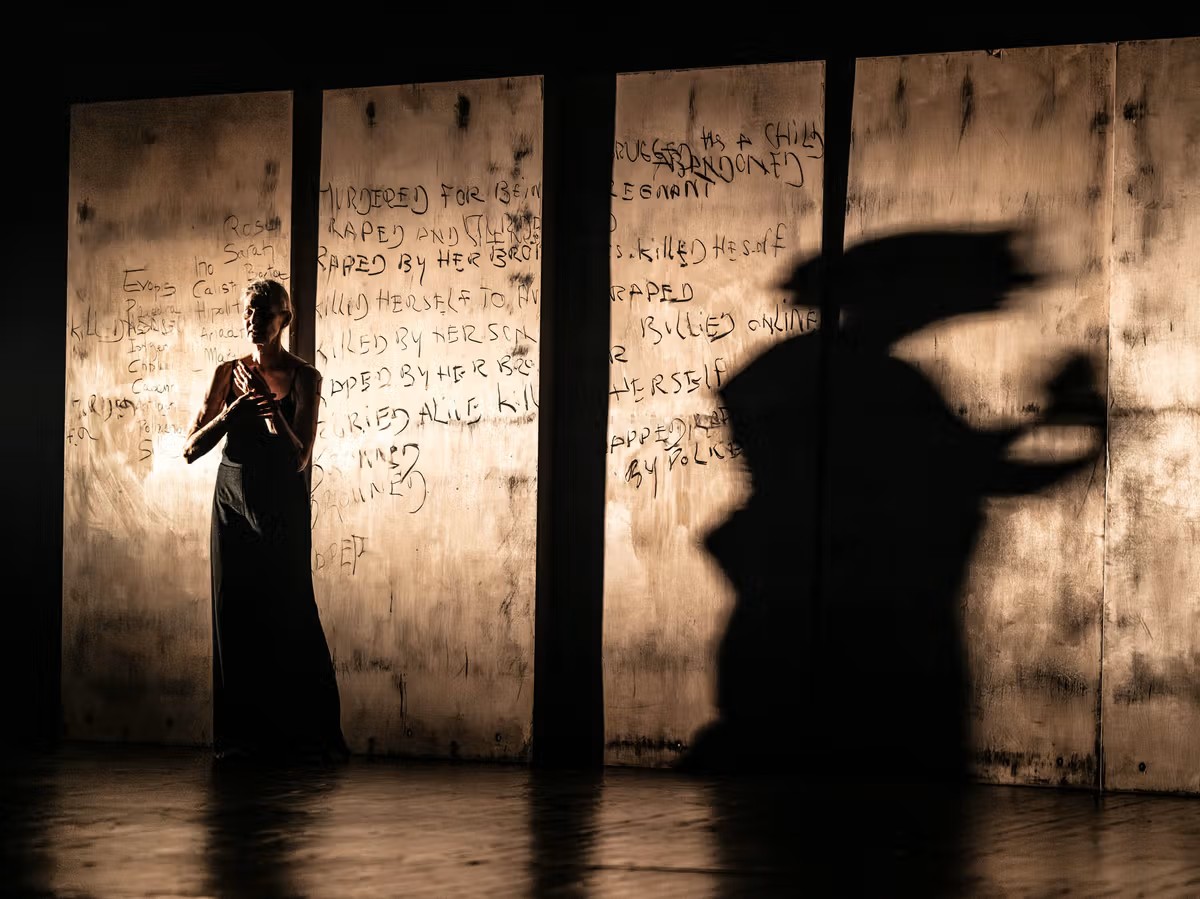
La performance si apre con un’immagine brutale: sulla scena è sospeso il corpo di una donna impiccata, che si proietta su uno dei sette pannelli a forma di L della scenografia, evocazione delle sette porte di Tebe. Si comincia dunque dalla fine della tragedia di Sofocle, nella quale il corpo di Antigone, impiccatasi nella grotta dove Creonte l’ha fatta rinchiudere, non viene mostrato, ma soltanto descritto da una guardia che lo ha visto. L’Antigone di Øyen inizia là dove la tragedia sofoclea si conclude: non resta molto da profetizzare all’uomo cieco, forse Tiresia, che attraversa il palcoscenico guidato da un ragazzo intento a descrivergli le rovine di una città devastata dalla guerra. Dove siamo? Nel mito? Quell’uomo è davvero Tiresia, venuto soltanto a constatare una catastrofe che conosceva già? Oppure siamo a Gaza e quell’uomo cieco rappresenta tutti noi, perché vediamo ma fingiamo di non vedere e, anche quando qualcuno ci racconta e ci spiega, continuiamo ostinatamente a rifiutarci di guardare? Poi lo spettacolo procede per quadri, nei quali i frammenti del racconto mitologico e gli episodi del presente si intrecciano costantemente.
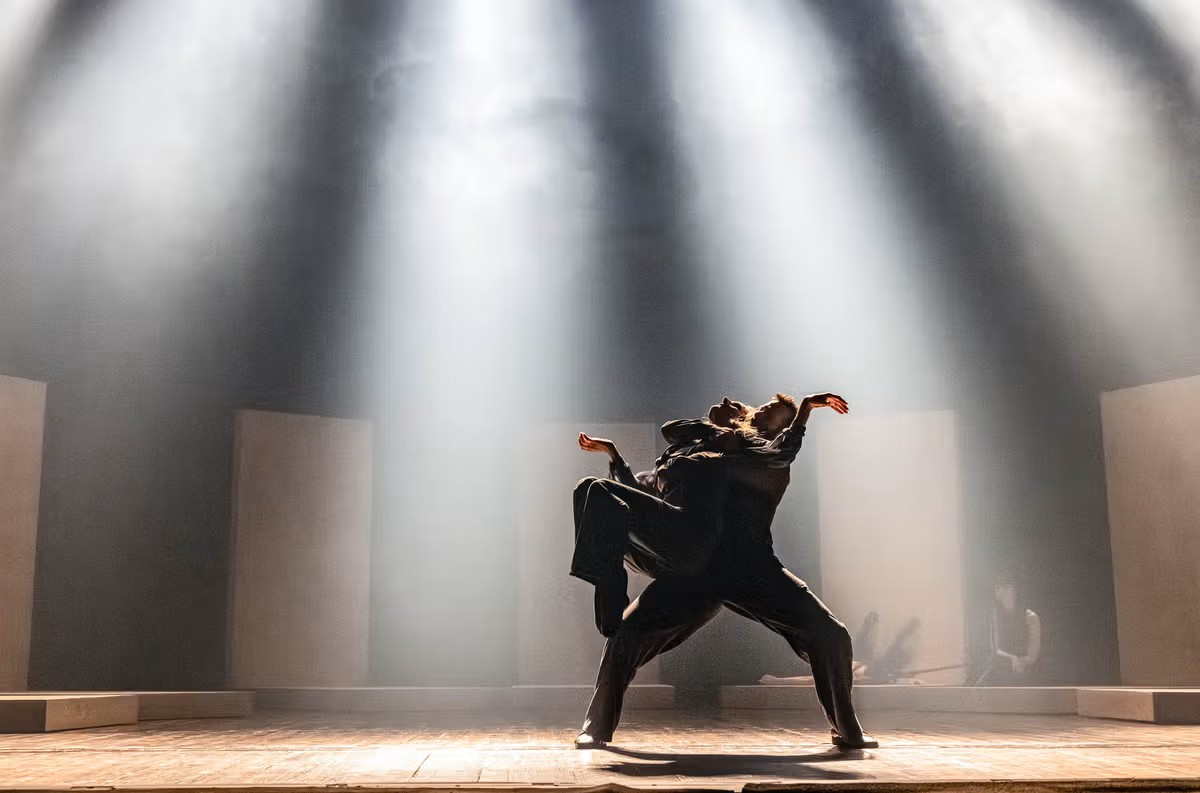
Due uomini si fronteggiano. Lottano, eppure i loro gesti sembrano quelli di un abbraccio. La sfida prende avvio da un braccio di ferro, ma quella stretta di mano si trasforma ben presto in una complessa sequenza di movimenti che invade l’intero spazio scenico. I loro corpi sembrano prolungarsi l’uno nell’altro, ciascuno anticipando, completando o assorbendo il movimento dell’avversario, fino a fondersi in una sorta di mortale pas de deux. Al termine di questa danza di guerra risuona un grido ormai impresso nella memoria collettiva: «Non respiro». È il grido che abbiamo ascoltato uscire dalla bocca di uomini uccisi, schiacciati come insetti da altri uomini. Poi il combattimento si arresta. Il duplice fratricidio si è compiuto. Erano Eteocle e Polinice?
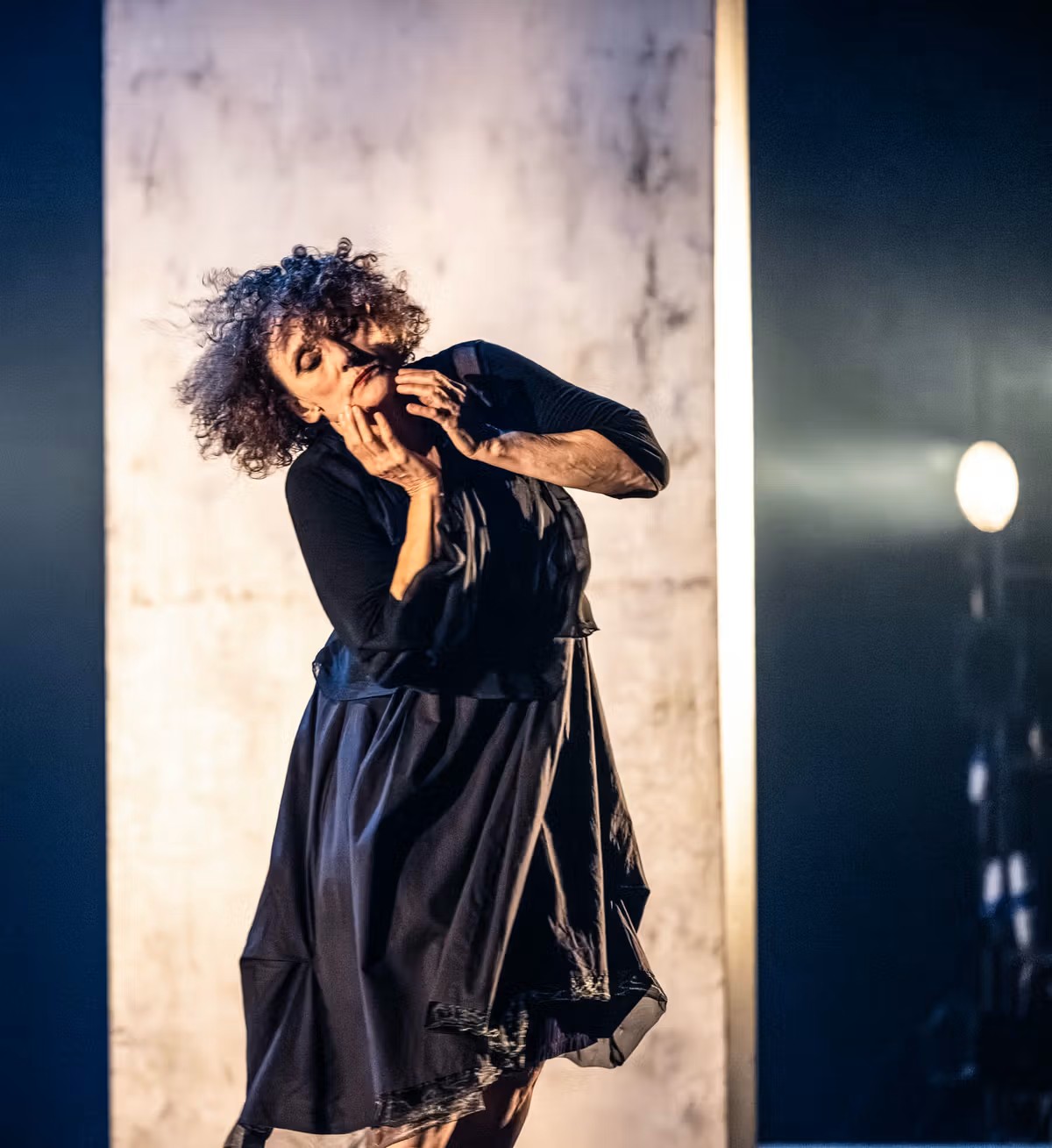
Uno dei due morti riemerge da una delle porte e racconta la propria decomposizione. Ma non c’è tempo per i compianti, né per seppellire i cadaveri. In un improvviso mutamento di atmosfera, una donna dialoga con Alexa e le chiede dove sia l’ingresso dell’Oltretomba. E poi ancora macerie, donne che piangono i figli, uomini che muoiono sul lavoro, Polinice finalmente sepolto, Emone, il figlio del tiranno innamorato di Antigone, cui non resta che sfogliare i petali di una rosa fragile come il suo amore perduto per sempre. I pannelli mobili scandiscono il succedersi degli episodi: diventano muri che includono o respingono, un letto, un tetto, uno schermo che protegge e una barriera che divide. Tutto confluisce in una grande danza della vita, nella quale lo spettatore è trascinato come sotto ipnosi.
La seconda parte dello spettacolo si scioglie dal mito, o meglio ne sviluppa le conseguenze, condensandole in quattro parole pronunciate ad alta voce: «vergogna», «giustizia», «incesto» e «onore», tracciate con il gesso sulla schiena di uno dei ballerini. In esse Øyen sembra racchiudere il senso della tragedia di Sofocle o, forse più precisamente, alcuni dei nuclei tematici attraverso cui si dispiega l’esperienza umana e che possono assumere le forme più diverse. Qui Antigone non è più che un pretesto. Ed è infatti nella parte forse più didascalica dello spettacolo che vengono ricordate donne stuprate, torturate, uccise per le loro idee e per il coraggio di averle difese.
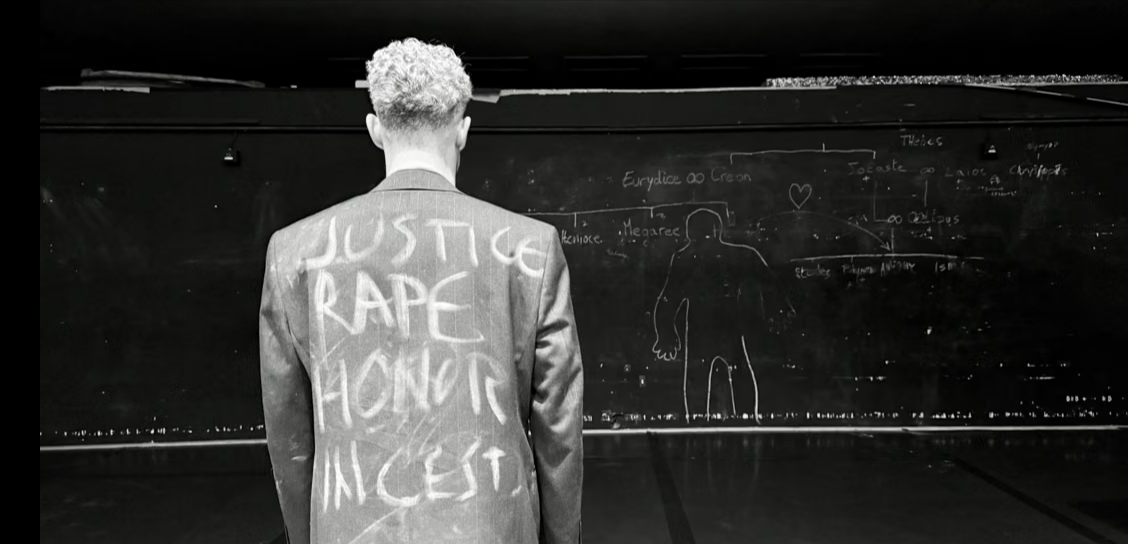
La formula «Il mio nome è…», completata ogni volta dal nome di una donna diversa, si trasforma progressivamente in un catalogo che accosta figure storiche, attiviste, martiri ed eroine del mito, da Ifigenia a Maya Angelou. La sequenza riflette la concezione di Øyen di un’Antigone plurale, resa evidente anche dalla scelta di affidare il ruolo di Antigone, nel corso dello spettacolo, a tutte le interpreti femminili.
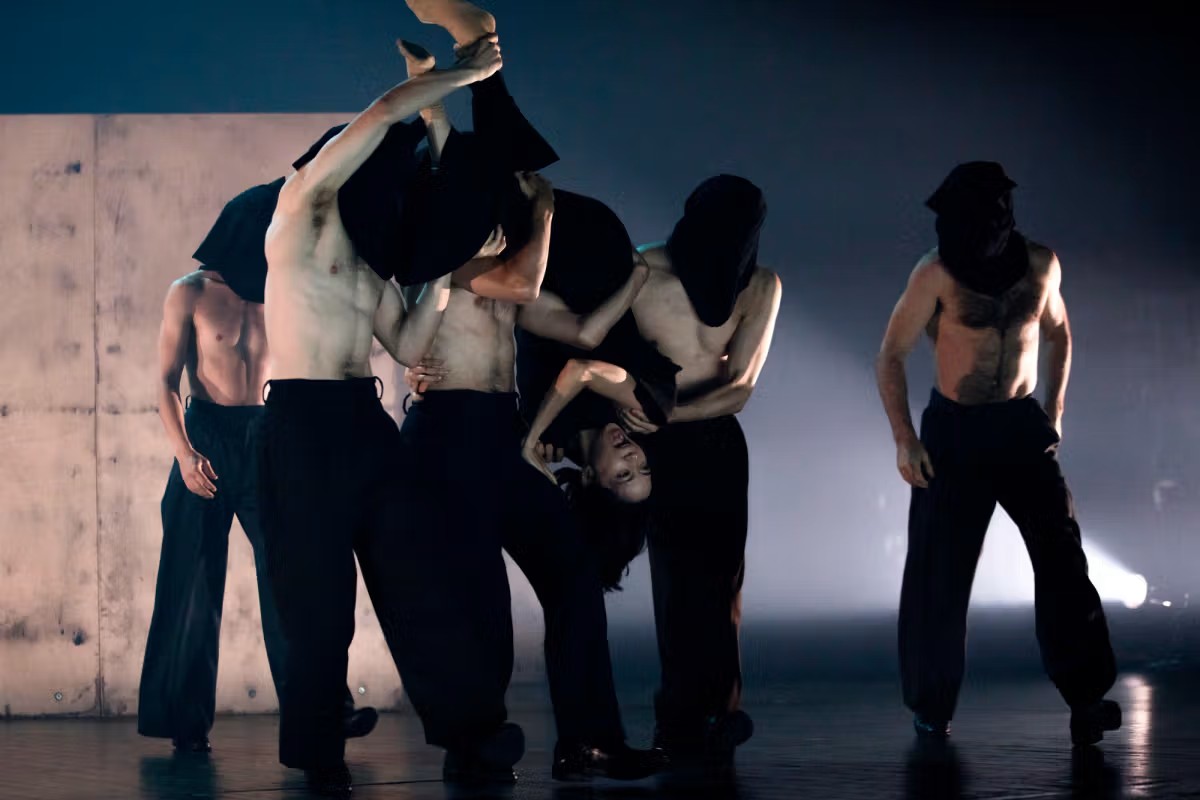
Questa Antigone di Øyen e del suo strepitoso corpo di ballo finisce con l’essere il simbolo stesso dell’esistenza e del suo trascorrere in uno spazio spesso ristretto, delimitato da legami familiari imposti e da un ambiente esterno ostile, tirannico, ingiusto. Antigone dà corpo, letteralmente, a ogni esperienza di una vita non vissuta a pieno, non perché manchi il desiderio di viverla, ma perché qualcuno impedisce con la forza una simile esperienza, spegne brutalmente la possibilità stessa della vita, riduce alle proprie categorie i sentimenti altrui, li piega e li distrugge. Antigone personifica tutto ciò che avrebbe potuto essere e non è stato: per un incidente sul lavoro, per la caduta di una bomba, per un incontro sbagliato, per una mano assassina, per una tempesta che sorprende un barcone. Il corpo di Antigone è quello di un bambino sulla spiaggia, di una donna accoltellata, di una famiglia sterminata nell’ennesimo raid su un campo profughi, dell’operaio schiacciato da lastre di marmo o soffocato dal caldo di un torrido agosto in un campo di pomodori.
E tuttavia resta la speranza, e non soltanto quella del ricordo («Ricordati che sei amato»: è questa la frase che viene fatta ripetere al pubblico). Ma che esista un mondo migliore, in cui non vi siano più macerie e cadaveri insepolti, un mondo senza fosse comuni e senza minacce nucleari, senza bambini sterminati e senza malati lasciati morire, senza persone costrette a dormire sull’asfalto o a morire di sete. Un mondo dove vi sia, semplicemente, il rispetto per la vita.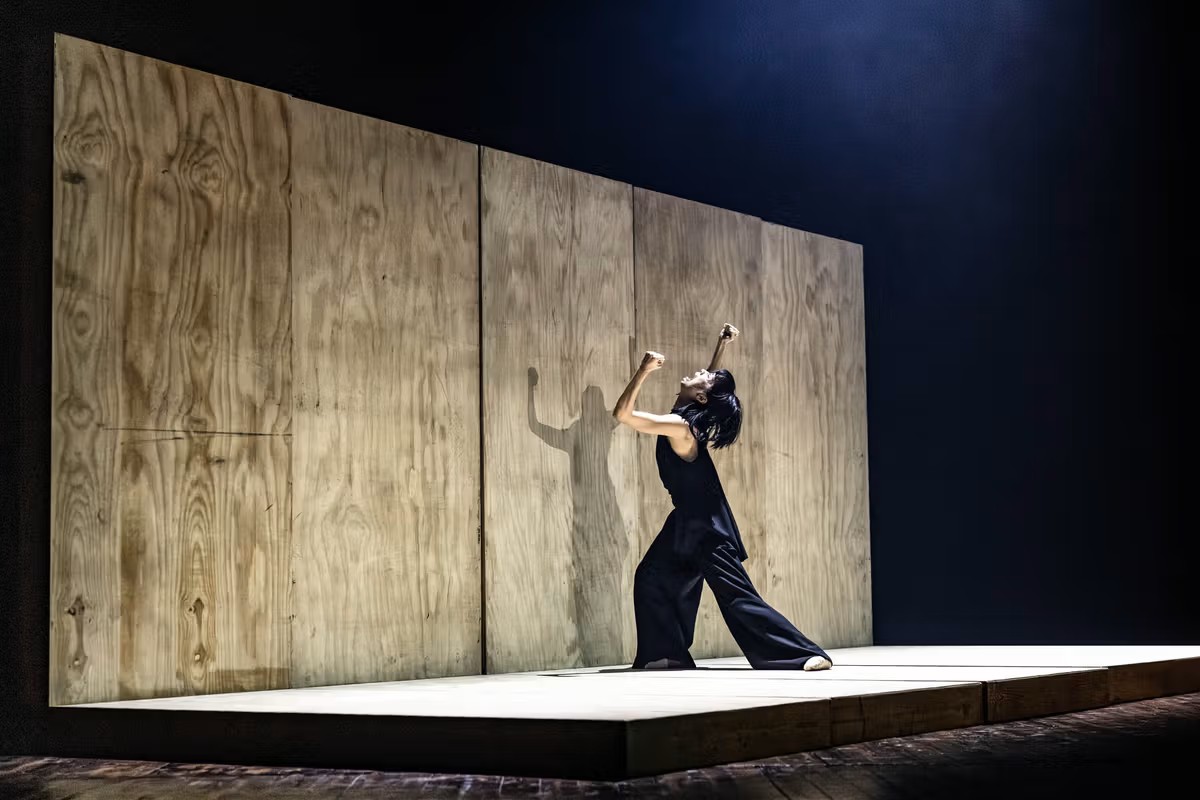
Antigone, regia e coreografia di Alan Lucien Øyen. Produzione Winter Guests, in coproduzione con la Fondazione Teatro di Roma – Teatro Nazionale, la Norwegian Opera and Ballet e il Centro Servizi Culturali Santa Chiara. Prima assoluta al Teatro Argentina di Roma il 22 luglio 2025. Ripreso al Teatro Argentina di Roma dal 28 al 31 maggio 2026 e presentato al Teatro Antico di Epidauro, nell'ambito dell'Athens Epidaurus Festival, il 7 e l'8 agosto 2026.
The Thousand Antigones in the Dance of Life. Antigone by Alan Lucien Øyen
Edvard Munch’s The Dance of Life depicts a celebration on the seashore on a moonlit night. At the centre of the painting stands a couple who seem less to be dancing than to remain perfectly still, gazing into each other’s eyes in an attitude of profound mutual understanding. On the left-hand side of the large canvas, a young woman dressed in white stands out, smiling as she advances with a light step, stretching out her arms towards a cluster of tall-stemmed flowers. On the opposite side appears the same woman, now older and dressed in black: her hands folded in her lap, her gaze lowered—or perhaps her eyes closed—absorbed in her thoughts; her lips drawn into an expression that seems to convey bitterness. The same woman, portrayed at two different stages of life, embodies different emotional states and their corresponding postures: on the one hand, the hopefulness of youth and the confident step towards happiness; on the other, the stillness of reflection, the turning back towards the past, or perhaps simply the awareness of how fleeting time is. Between them lies the shadow of a love.
The two female figures, with the dancing couple at the centre, form a whole that can ideally be inscribed within an ellipse and represent the unfolding of life. We know that in the two central dancers the painter intended to portray himself and his first love, the woman dressed in red. A lost love, the memory of a passion, a recurring dream. The colours of the garments—white, red, and black—stand in sharp contrast to one another and establish the internal rhythm of the painting, a dance that also extends to the other figures in the background: three dancing couples, a solitary woman, and a barely visible man who appears to be dancing with a partner. The women are dressed in white, the men in black; the figures are fluid, their features indistinct. Only one man, his face buried against the woman's shoulders, expresses an almost ravenous desire through wide-open eyes that recall a tragic mask.
The full moon stands out in the sky. Its reflection on the water takes the shape of a figure with outstretched arms. Yet the moon is distant, and its reflection, too, is broken by the deep blue of the sea, where two boats and two sailing ships can be discerned. The whole span of a human life thus seems enclosed within a single waltz, within a summer celebration, within an ephemeral bath of light. What remains is a sense of longing for those worlds beyond the sea that have remained unknown to us, for the journeys we never undertook, for a love that will never be fulfilled, for a passion that will never be rekindled.
The two figures of the same woman, representing two different seasons of life, also express an inalienable solitude: from every experience, whether joyful or painful, what ultimately remains is the encounter with ourselves, with our own thoughts. The woman, both in her youthful and in her older incarnation, appears detached from those around her, enclosed within herself. Thus, the celebration is overshadowed by the presence of death, of fleeting joy, of music fading into silence, of the dance coming to a halt, of love turning into a faded memory. The figures dance to the rhythm of a silent music that draws both people and things into a single vortex. The Dance of Life is a dance of shadows that brush against one another, meet for a single fleeting moment, embrace, and then vanish in the relentless flow of time. And it is precisely because life is so ephemeral that it must be lived in every moment granted to us.
There can be little doubt that Alan Lucien Øyen, the Norwegian writer, theatre director, and choreographer, knows The Dance of Life well and has contemplated it many times in Oslo, his native city, in the luminous glass-fronted museum overlooking the fjord that is dedicated to Munch. Nor can there be any doubt that he has often walked through the sculpture park created by Gustav Vigeland, lingering among the choreographies of its statues, and in particular before the one entitled The Wheel of Life. The wheel is a symbol of eternity, conceived by Vigeland as a revolving garland of women, men, and children holding hands in an embrace destined to last forever. The sculpture encapsulates the central theme of the entire park: a meditation on the journey of human existence, from the cradle to the grave, through joy and sorrow, dreams, imagination, hope, and desires, whether fulfilled or unfulfilled.
I have no reason to believe that Øyen drew direct inspiration from either of these works for his Antigone, itself, of course, inspired by Sophocles' tragedy. Yet the performance shares with Munch's painting the centrality of a female figure who is doubled and observes the dance of life from different perspectives; with Vigeland's monumental sculpture, by contrast, it shares the circular embrace of the dancers, which both opens and seals a powerful and deeply engaging performance set to the strains of SYML's I Wanted to Leave, whose echoes continue to resonate in the hearts of the audience long after the performance has ended. (To gain even a brief impression of it, see the trailer: https://www.youtube.com/watch?v=THJp15XjwMo.)
Indeed, in one of the opening scenes of the performance, the nine performers dance slowly in a circle: their movements appear light and spontaneous, almost suspended in the air. The same dance returns at the end of the three-hour performance, becoming a metaphor for the human condition, suspended between fragility and discipline, expressive freedom and constraint, desire and necessity, freely chosen bonds and imposed ties, the inevitability of loss and the willingness to let go, the expectation of what is to come and nostalgia for what we once were. The Wheel of Life.
The performance is divided into two parts: the first remains more firmly anchored in the ancient myth, while the second amplifies its meanings within the experience of each one of us. Øyen's Antigone is a continuous flow of movements, gestures, and words, traversing the great questions of human existence: death, love, and violence.
The performance opens with a brutal image: suspended on stage is the body of a woman who has hanged herself, projected onto one of the seven L-shaped panels of the set, evoking the seven gates of Thebes. Thus, it begins where Sophocles' tragedy ends, in which Antigone's body, after she has hanged herself in the cave where Creon has imprisoned her, is never shown but only described by a guard who has seen it. Øyen's Antigone begins precisely where Sophocles' tragedy comes to an end: there is little left for the blind man—perhaps Teiresias—to prophesy as he crosses the stage, guided by a young boy who describes to him the ruins of a city devastated by war. Where are we? In myth? Is that man truly Teiresias, come only to witness a catastrophe he already knew was inevitable? Or are we in Gaza, and does that blind man stand for all of us, because we see yet pretend not to see, and even when someone tells us and explains everything, we stubbornly refuse to look? The performance then unfolds as a sequence of tableaux in which fragments of the mythical narrative and episodes from the present are constantly interwoven.
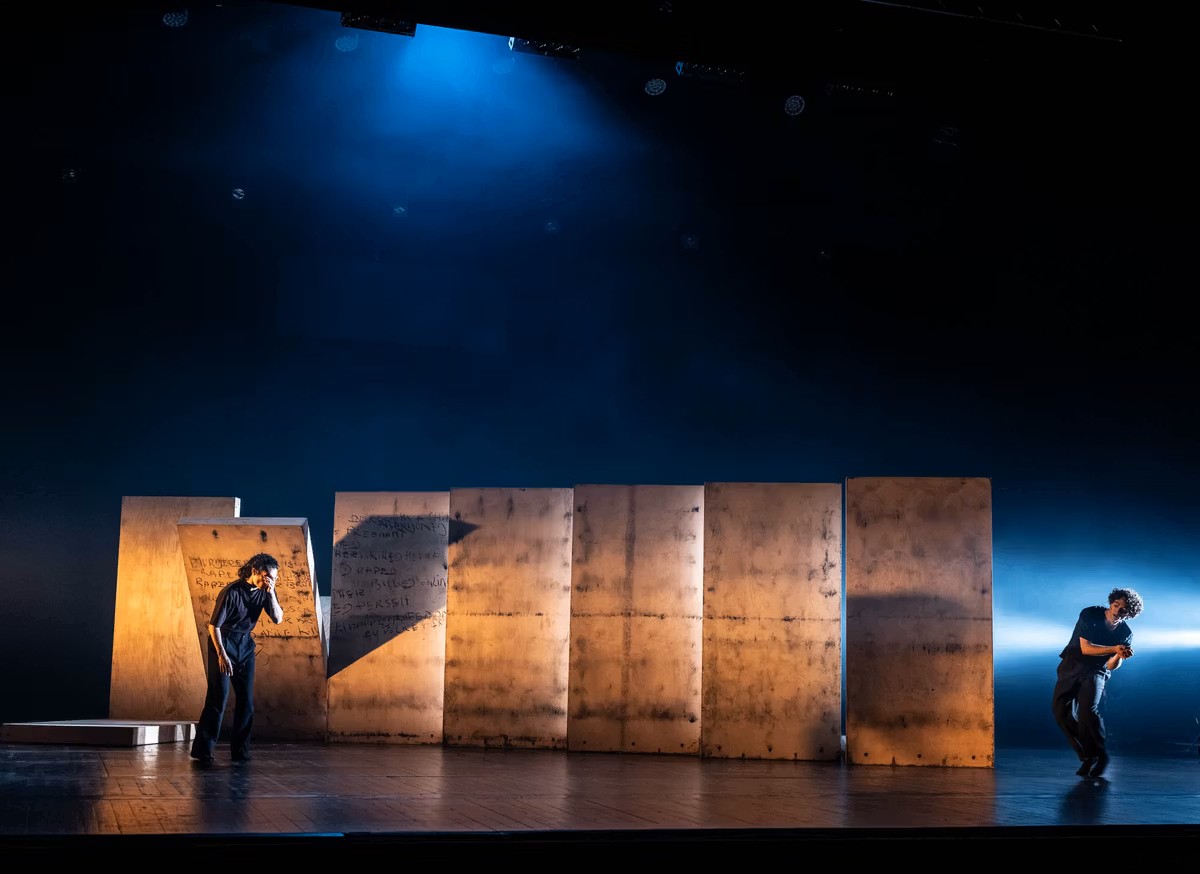
Two men confront one another. They struggle, yet their movements resemble an embrace. The contest begins as an arm wrestle, but that clasp of hands soon develops into a complex sequence of movements that expands across the entire stage. Their bodies seem to extend into one another, each anticipating, completing, or absorbing the other's movement, until they merge into a kind of deadly pas de deux. At the end of this dance of war, a cry resounds, one that has become indelibly etched in our collective memory: “I can't breathe.” It is the cry we have heard uttered by men killed, crushed like insects by other men. Then the struggle comes to a halt. The double fratricide has been accomplished. Were they Eteocles and Polynices?
One of the two dead men re-emerges from one of the doors and recounts his own decomposition. But there is no time for mourning, nor to bury the dead. In a sudden shift of atmosphere, a woman speaks with Alexa and asks where the entrance to the Underworld is. Then once again there are ruins, women mourning their children, men dying at work, Polynices finally laid to rest, Haemon, the tyrant's son in love with Antigone, left with nothing but the petals of a rose to pluck, as fragile as the love he has lost forever. The movable panels mark the succession of scenes: they become walls that include or exclude, a bed, a roof, a screen that protects, and a barrier that divides. Everything converges in a great dance of life, into which the spectator is drawn as though under hypnosis.
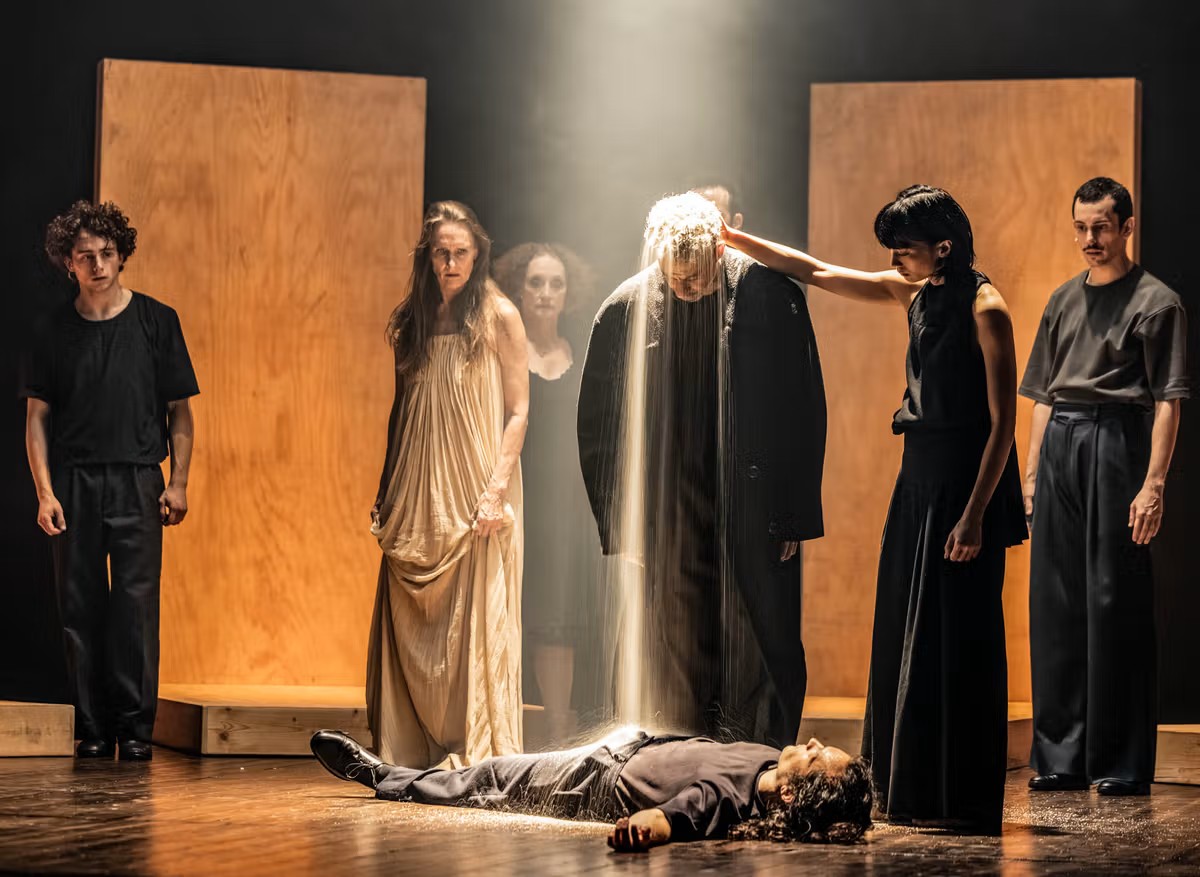
The second part of the performance gradually detaches itself from the myth, or rather develops its implications, condensing them into four words spoken aloud: “shame,” “justice,” “incest,” and “honour,” written in chalk across the back of one of the dancers. In these words, Øyen seems to encapsulate the meaning of Sophocles' tragedy or, perhaps more precisely, some of the thematic nuclei through which human experience unfolds and which may assume the most diverse forms. Here, Antigone is no more than a pretext. It is, indeed, in what is perhaps the most didactic part of the performance that women who were raped, tortured, and murdered for their beliefs and for the courage to defend them are commemorated.
The formula “My name is...”, completed each time with the name of a different woman, gradually becomes a catalogue bringing together historical figures, activists, martyrs, and heroines of myth, from Iphigenia to Maya Angelou. The sequence reflects Øyen's conception of a plural Antigone, made explicit by the decision to entrust the role of Antigone, at different moments in the performance, to all the female performers.
This Antigone, embodied by Øyen's extraordinary company of dancers, ultimately becomes the very symbol of human existence and of its passage through a space often confined by imposed family bonds and by an external environment that is hostile, tyrannical, and unjust. Antigone quite literally gives body to every experience of a life not lived to the full, not because the desire to live it is lacking, but because someone forcibly prevents such an experience, brutally extinguishes the very possibility of life, reduces the feelings of others to their own categories, bends them, and destroys them. Antigone personifies everything that might have been but never came to be: because of an accident at work, the fall of a bomb, a fatal encounter, a murderous hand, or a storm overtaking a migrant boat. Antigone's body is that of a child lying on a beach, of a woman stabbed to death, of a family exterminated in yet another raid on a refugee camp, of a worker crushed beneath marble slabs or suffocated by the scorching heat of an August day in a tomato field.
And yet hope remains, and not only the hope sustained by memory (“Remember that you are loved”: this is the sentence the audience is invited to repeat). It is also the hope that a better world may exist, a world with no more ruins or unburied bodies, a world without mass graves or nuclear threats, without murdered children or the sick abandoned to die, without people forced to sleep on the pavement or to die of thirst. A world in which there is, quite simply, respect for life.
Antigone, directed and choreographed by Alan Lucien Øyen. Produced by Winter Guests in co-production with Fondazione Teatro di Roma – Teatro Nazionale, The Norwegian Opera and Ballet, and Centro Servizi Culturali Santa Chiara. World premiere at the Teatro Argentina, Rome, on 22 July 2025. Revived at the Teatro Argentina, Rome (28–31 May 2026), and presented at the Ancient Theatre of Epidaurus as part of the Athens Epidaurus Festival (7–8 August 2026).
Bibliography:
Raffaella Viccei, Il corpo sospeso. Antigone, regia di Alan Lucien Øyen, al Teatro Argentina di Roma, “Fata Morgana Web”, https://www.fatamorganaweb.it/antigone-oyen/
Ariadne Mikou, Alan Lucien Øyen’s Antigone: Between Myth and Invention, Dance context webzine, https://www.dancecontextwebzine.com/reviews/alan-lucien-yens-antigone-between-myth-and-invention
Michele Sciancalepore, «Siamo pelle e ossa»: dalla tragedia al presente, l'Antigone secondo Øyen, Avvenire 24 luglio 2025, https://www.avvenire.it/agora/spettacoli/siamo-pelle-e-ossa-dalla-tragedia-al-presente-lantigone-secondo-oyen_93694
Photo: @Mats Bäcker