
English version below
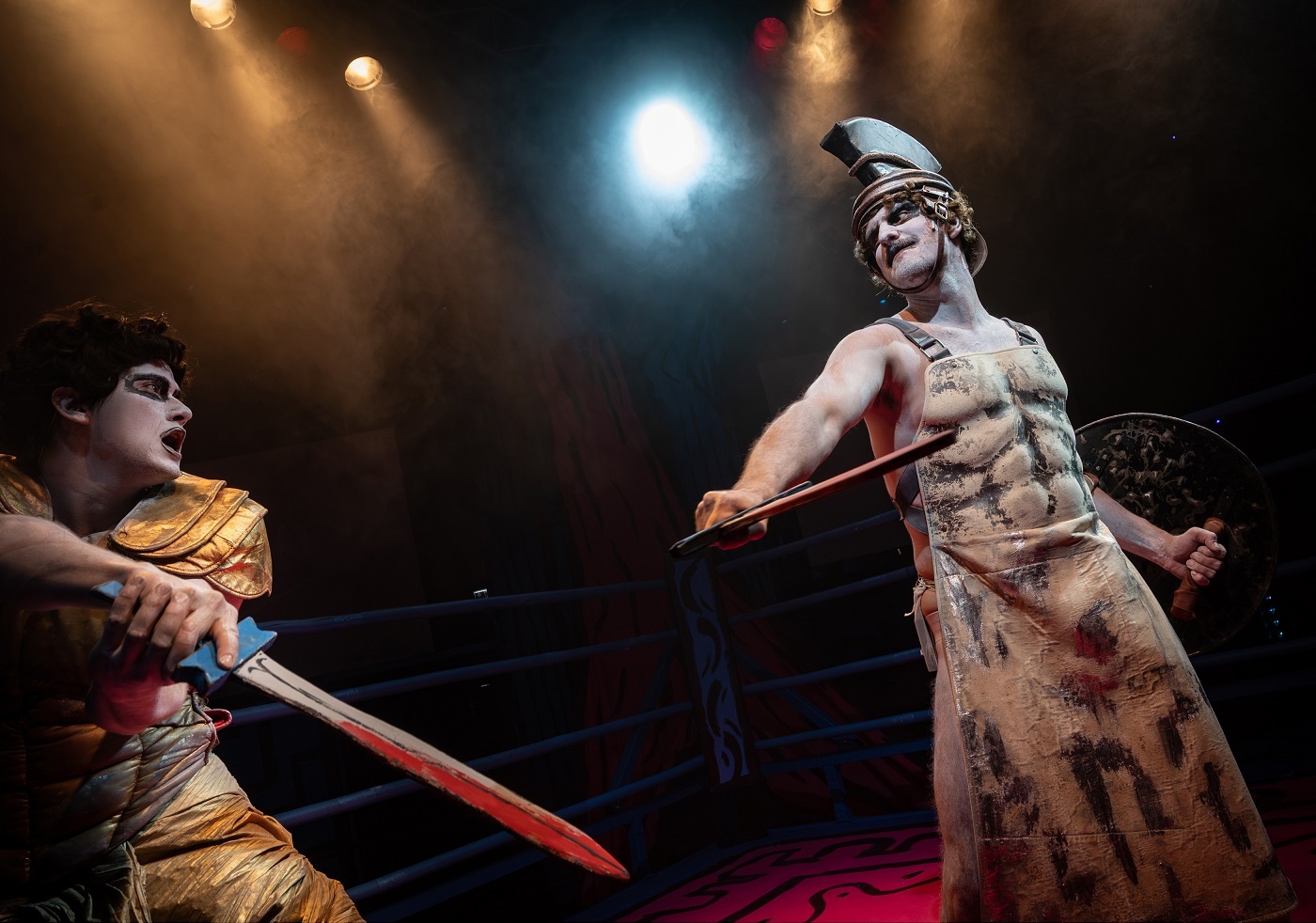
Su un ring da wrestling, un annunciatore con una maschera grottesca proclama la «lotta dei Titani». La folla eccitata inneggia a Zeus e urla: “Eroe! Eroe!” per incitare il beniamino di turno che sale sul ring. Gli eroi, non tutti umani, salgono sull’arena, mostruosi e giganteschi, e si impegnano in una competizione senza esclusione di colpi, con arti amputati e teste decapitate: il sangue scorre a fiumi.
Intorno, in una rumorosa atmosfera che trasuda violenza, personaggi mascherati, allegorie dell’orrore e di paure ancestrali, si affrontano in uno sconvolgente gioco al massacro. I personaggi portano i nomi noti dei protagonisti dei racconti mitologici greci, che anche altrove, oggi, sembrano resuscitare nella letteratura, nel cinema, nell’arte a ricordarci la smisurata ferocia del nostro tempo. Come se il ‘tempo’ delle mitiche lotte dei Titani non fosse sepolto in un arcaico passato e non fosse finito; come se tutti quei mostri e quegli ‘eroi’, che agiscono mediante l’imposizione della forza più brutale, si aggirassero ancora tra noi - magari con altre maschere.
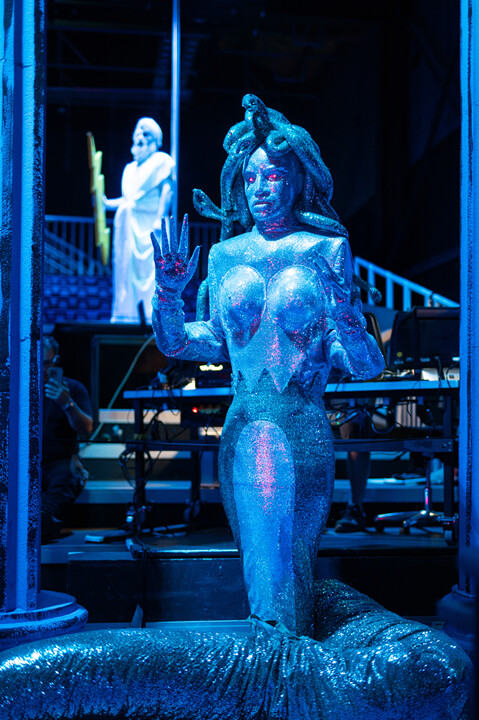
Il luogo della rappresentazione di queste cruente vicende mitologiche non è irrilevante. Si tratta del grande cinema del villaggio Franklin, che con circa 10.000 militari fino al 2011 è stata la più grande base statunitense in Germania. Adesso, mentre si restaura la sede storica del teatro di Mannheim, il cinema del villaggio Franklin è divenuto luogo di performances e di incontro, un luogo di cultura che ricorda però la guerra e la divisione della Germania post-bellica. Quale luogo più adatto per la messa in scena di un allegorico ‘scontro di Titani’, per citare il titolo del celebre film del 1981?
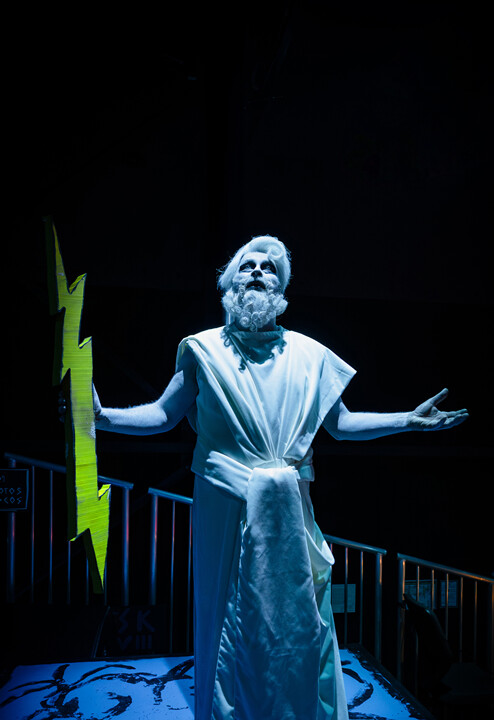
Lotta dei Titani, Kampf der Titanen, lo spettacolo immersivo di Christian Weise in questo vecchio e grande cinema alla periferia di Mannheim, conduce gli spettatori in un viaggio attraverso il mondo dei miti e del teatro dell’antica Grecia, un mondo dalle forme fantasmagoriche e oniriche.
Si comincia dall’inizio: dal Caos emerse Gaia e con lei – e da lei – nacque un cosmo traboccante di dèi, semidei, eroi e creature favolose, con le loro guerre e le loro storie d’amore. E si racconta anche l’inizio del teatro, quando dai riti agresti dedicati a un oscuro dio orientale della fertilità nacquero le Dionisie attiche, feste che duravano più giorni, fatte di banchetti, ubriachezza, canti e agoni.
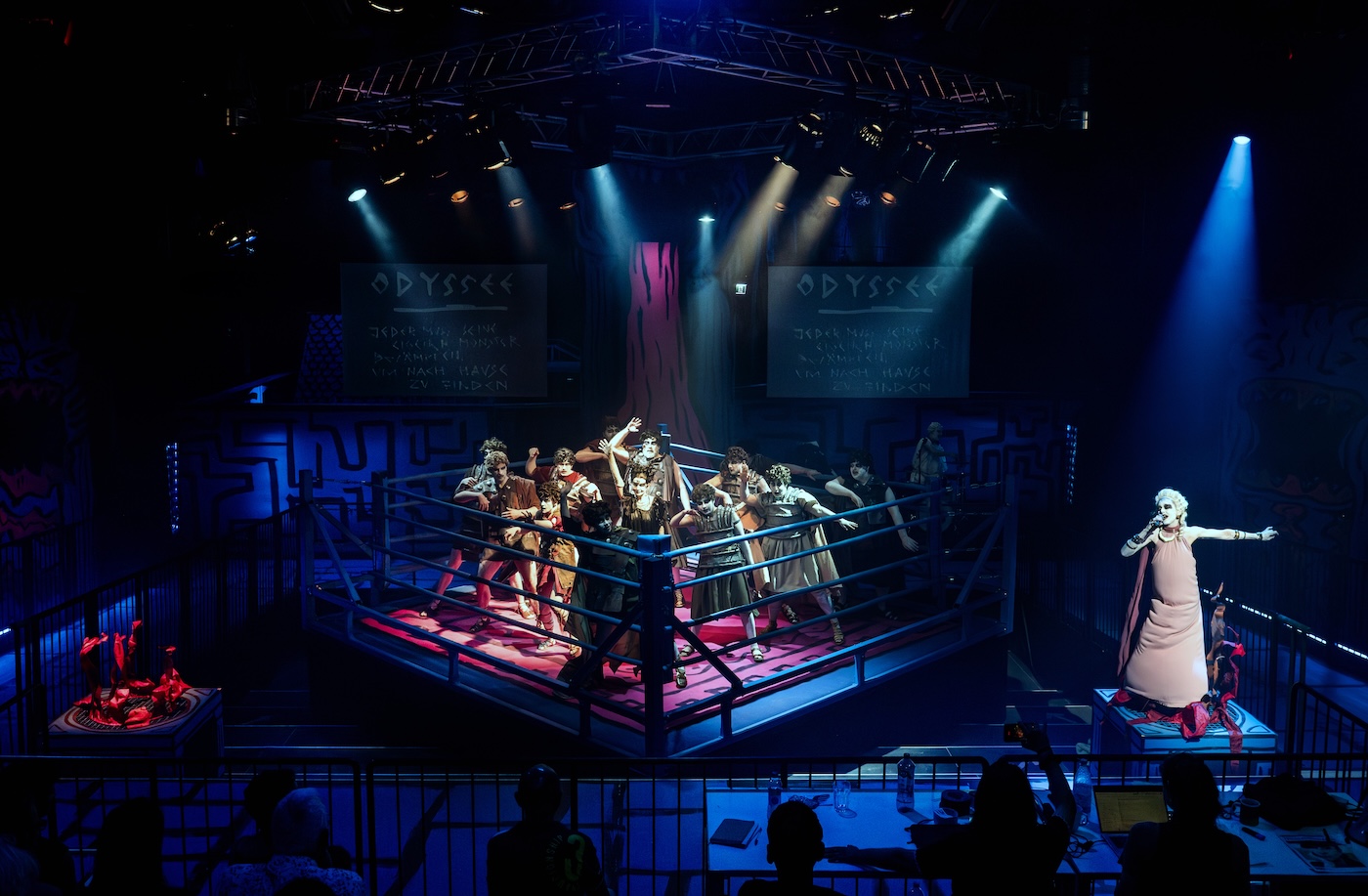
Lo spettacolo ha due versioni, una di quattro, l’altra di sei ore. Lo spettatore decide da solo quando prendersi una pausa, magari mangiando una ‘Focaccia Ermes’ o una ‘Focaccia Atena’ nell’annesso ristorante. A ritmo serrato vengono rappresentati la nascita degli dèi, la creazione dell’uomo, le fatiche di Eracle, celebri tragedie (Edipo re, I sette contro Tebe, Antigone e Orestea), oltre a episodi dell’Iliade e dell’Odissea.
Siamo di fronte a un ritorno degli antichi dèi e degli eroi e, insieme, forse alla loro definitiva caduta. E siamo di fronte ad un rifiuto di quel classicismo retorico ancora molto in uso, secondo il quale dovremmo cercare nei Greci «modelli» e illusori «valori» dell’umano. Miti e tragedie qui si intrecciano invece con il reality show nello stile di Temptation Island, il wrestling, le creazioni grafiche della IA e le esibizioni di TikTok. L’obiettivo principale del regista Christian Weise sembra quello di celebrare una grande festa collettiva e questo obiettivo può dirsi raggiunto: nelle sei ore si vive infatti un’ubriacatura di suoni, colori e costumi, un rave, un happening. Forse era questo anche l’intento del teatro antico? Forse nello smarrimento tra queste figure e la loro brutalità consisteva la catarsi?

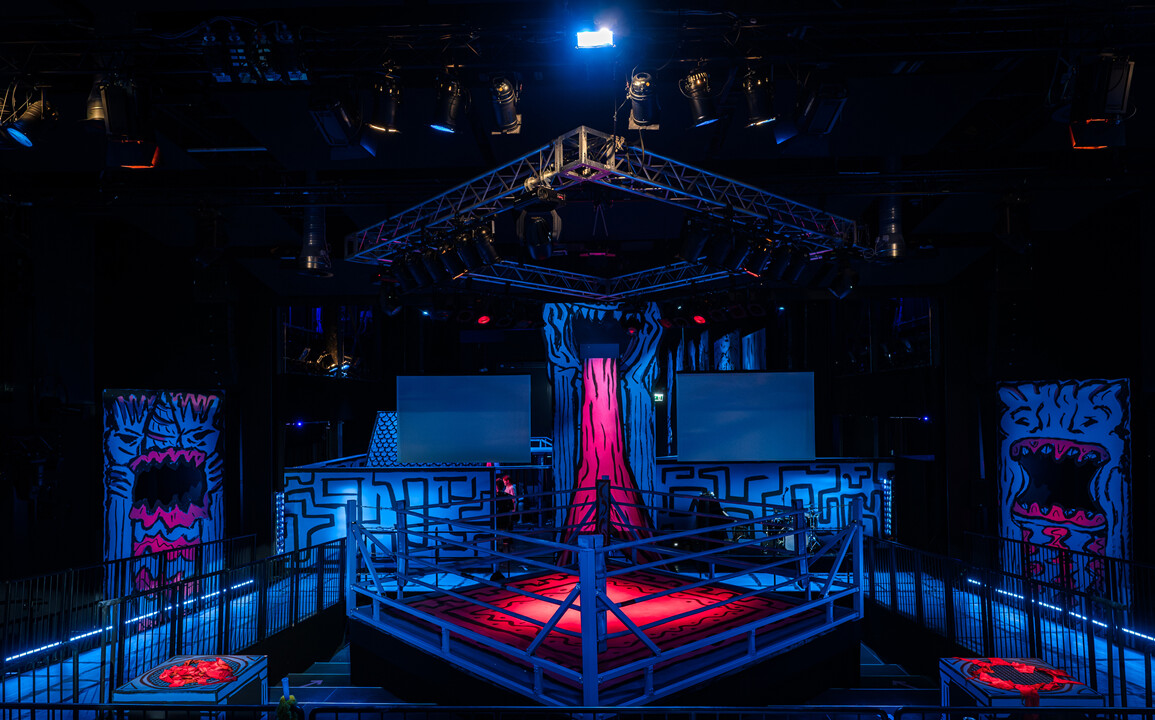
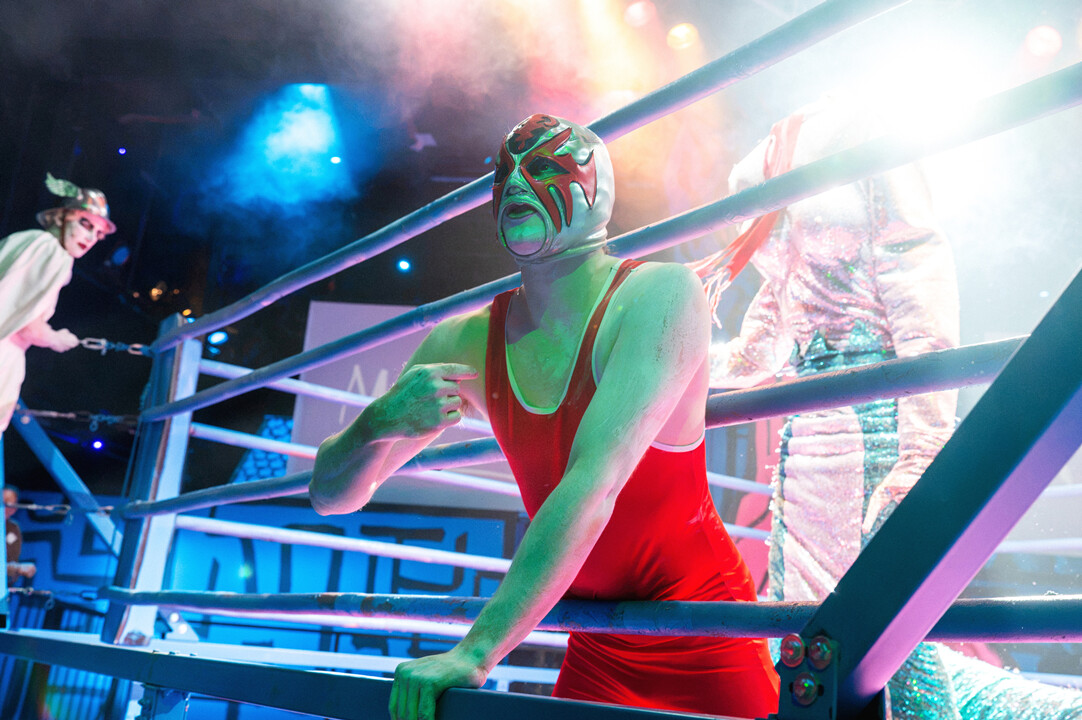
Lo scenografo Alexander Naumann trasforma il cosmo greco in un luna park e in un labirinto con pareti, corridoi, ostacoli, rampe, passerelle e rifugi, così da permettere agli spettatori, trasformati nei giocatori di un enorme videogioco, di nascondersi, tendere imboscate e muoversi strategicamente. L’ambiente è immerso in luci ultraviolette e al neon, con colori fluorescenti, fumo artificiale, musica ad alto volume e altri effetti sonori. Al centro campeggia il ring; alle sue spalle un nodo di corridoi che conduce a una dark room BDSM, vietata ai minori di diciotto anni, a una decappottabile in rovina e a una stanza dedicata alla lettura dei tarocchi. A completare questo sorprendente sovraccarico sensoriale contribuiscono gli straordinari costumi di Josa Marx, un eclettico assemblaggio di armature antiche, costumi per i combattenti del wrestling, e giacche Adidas.
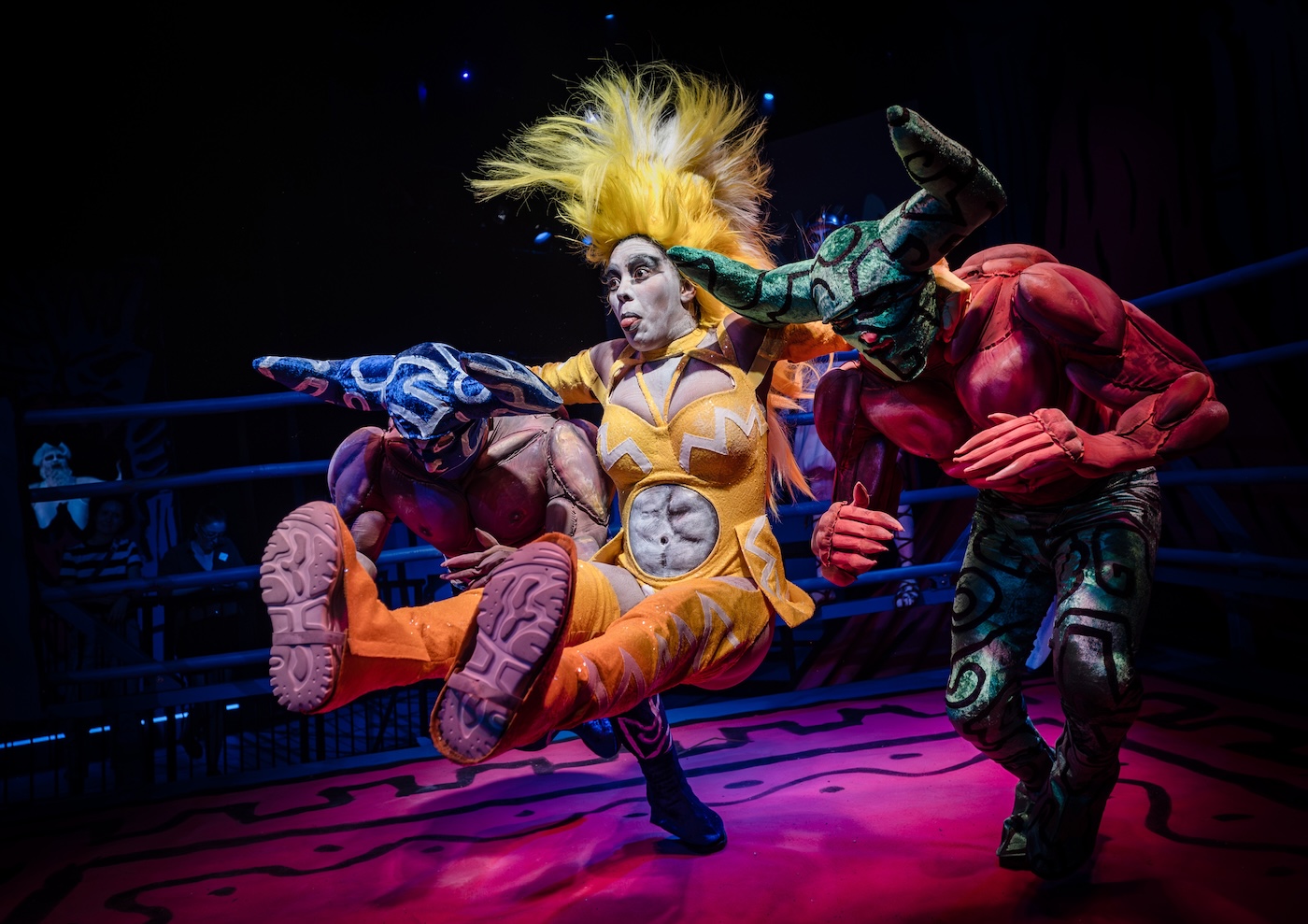
Il vero centro dell’azione resta però il ring da wrestling. Qui gli scontri di Eracle (Maria Helena Bretschneider) con i mostri mitologici si trasformano in uno spettacolo di grande effetto, ricco di acrobazie e salti spettacolari. Anche i tormenti familiari di Edipo (Shirin Ali) approdano sulla stessa arena, reinventati come una versione trash di una sitcom, nella quale il personaggio più ‘tragico’ dell’antichità sfoggia un umorismo da teenager, gergo da periferia e una serie di battute assai volgari.
Da questo spettacolo che obbedisce soprattutto all’immaginario fantasy, si distacca nettamente solo la messinscena dell’Antigone. Tre attori del numeroso ensemble interpretano la tragedia di Sofocle indossando maschere e costumi di ispirazione antica, accompagnati da musica di tamburi e aerofoni. Annunciato come il «momento serio» dello spettacolo, questo episodio rompe radicalmente con il tono dominante della serata, tanto da apparire isolato e privo di collegamenti con il resto: forse si tratta di una sottile parodia?
Per alcuni, certamente, questa maniera di leggere la mitologia ‘classica’ e di interpretare le tragedie greche sembrerà vicina alla profanazione e allo svilimento. Si tratta invece di un grande gioco e forse il wrestling, con i suoi «eroi» esagerati e le sue mascherate, può essere più vicino al carattere dionisiaco del teatro antico di quanto lo siano alcune sue odierne riprese «filologiche», comprese la declamazione urlata e l’adozione di costumi e maschere antichizzanti che non di rado risultano anche involontariamente grottesche e parodistiche.
E dunque: meglio partecipare al gioco dei Titani e divertirsi che andare alla ricerca, in quel che ci rimane dell’antichità, di assolute ‘verità’.
Not Only Nolan: Fantasy Meets Greek Myth (Nationaltheater Mannheim)
In a wrestling ring, an announcer wearing a grotesque mask proclaims the “Battle of the Titans.” An excited crowd chants the name of Zeus and shouts, “Hero! Hero!” to cheer on the latest champion stepping into the ring. The heroes—not all of them human—enter the arena, monstrous and gigantic, engaging in a no-holds-barred contest of mutilated bodies, severed limbs, and decapitated heads. Blood flows in torrents.
All around them, in a deafening atmosphere saturated with violence, masked figures—allegories of horror and primordial fears—confront one another in a shocking spectacle of slaughter. They bear the familiar names of the protagonists of Greek myth, figures that today seem once again to come alive in literature, cinema, and the visual arts, reminding us of the boundless ferocity of our own age. It is as though the age of the mythical struggles of the Titans had never been buried in a remote archaic past, as though it had never truly ended; as though all those monsters and those “heroes,” who impose their will through the most brutal forms of violence, were still roaming among us—perhaps merely wearing different masks.
The choice of venue for staging these bloody myths is far from incidental. The performance takes place in the large cinema of Franklin Village, which until 2011 formed part of what was, with around 10,000 military personnel, the largest United States Army base in Germany. Today, while the historic home of the National Theatre Mannheim is undergoing restoration, the Franklin Village cinema has been transformed into a venue for performances and public gatherings—a place of culture that nevertheless still evokes the war and the division of post-war Germany. What more fitting setting could there be for the staging of an allegorical Clash of the Titans, to borrow the title of the celebrated 1981 film?
Battle of the Titans (Kampf der Titanen), Christian Weise's immersive theatrical production staged in this vast former cinema on the outskirts of Mannheim, takes its audience on a journey through the world of Greek myth and ancient theatre—a world of phantasmagorical and dreamlike forms inhabited by fantastic creatures.
The journey begins at the beginning itself. From the gaping abyss of Chaos emerged Gaia, and with her—and from her—was born a cosmos teeming with gods, demigods, heroes, and fabulous creatures, together with all their wars and love stories. The origins of theatre are also recounted, when the Attic Dionysia grew out of rural rites dedicated to an obscure Eastern god of fertility: festivals lasting several days, filled with banquets, drunkenness, songs, and dramatic competitions.
The production exists in two versions, one lasting four hours, the other six. Spectators are free to decide when to take a break, perhaps enjoying a “Hermes Focaccia” or an “Athena Focaccia” in the adjoining restaurant. At a relentless pace, the performance stages the birth of the gods, the creation of humankind, the Labours of Heracles, famous tragedies (Oedipus Rex, Seven Against Thebes, Antigone, and the Oresteia), as well as episodes from the Iliad and the Odyssey.
We are confronted with the return of the ancient gods and heroes and, at the same time, perhaps with their definitive downfall. We are also confronted with a rejection of the rhetorical classicism that remains widespread today, according to which we should look to the Greeks for exemplary “models” and illusory “human values.” Here, myths and tragedies are instead interwoven with reality television in the style of Temptation Island, wrestling, AI-generated imagery, and TikTok performances.
Christian Weise's principal aim seems to be the celebration of a great collective festival, and in this he undoubtedly succeeds. Over the course of six hours, the audience experiences an intoxicating flood of sounds, colours, and costumes—a rave, a happening. Was this perhaps the purpose of ancient theatre as well? Did catharsis perhaps reside precisely in the spectators' bewilderment before these figures and their overwhelming brutality?
Set designer Alexander Naumann transforms the Greek cosmos into a grotesque amusement park and a labyrinth of walls, corridors, obstacles, ramps, catwalks, and hiding places, allowing spectators—turned into players in a giant video game—to conceal themselves, set ambushes, and move strategically through the space. The environment is immersed in ultraviolet and neon lighting, fluorescent colours, artificial smoke, loud music, and a rich array of sound effects. At its centre stands a wrestling ring; behind it stretches a maze of corridors leading to an adults-only BDSM dark room, a dilapidated convertible car, and a room devoted to tarot reading. Completing this remarkable sensory overload are Josa Marx's extraordinary costumes, an eclectic combination of ancient armour, wrestling outfits, and Adidas jackets.
The true centre of the action, however, remains the wrestling ring. Here Heracles' encounters with the monsters of Greek mythology (Maria Helena Bretschneider) are transformed into a spectacular wrestling show, filled with breathtaking acrobatics and daring leaps. Oedipus' family torments (Shirin Ali) likewise unfold in the same arena, reimagined as a trashy sitcom in which antiquity's most tragic hero displays teenage humour, suburban slang, and an endless stream of outrageously vulgar jokes.
Against the backdrop of a production governed above all by the aesthetics of fantasy, only the staging of Antigone stands apart. Three members of the large ensemble perform Sophocles' tragedy wearing masks and costumes inspired by antiquity, accompanied by drums and wind instruments. Announced as the performance's "serious moment," this episode breaks so radically with the dominant tone of the evening that it appears isolated and disconnected from everything else. One cannot help wondering whether this, too, is intended as a subtle parody.
For many, this way of approaching "classical" mythology and interpreting Greek tragedy will undoubtedly seem close to profanation, if not outright debasement. Yet the production is, above all, a grand game. Wrestling—with its exaggerated "heroes," flamboyant masks, and ritualized performances—may in fact come closer to the Dionysian spirit of ancient theatre than many contemporary "philological" recreations, including shouted declamation and the use of pseudo-antique costumes and masks, which all too often end up appearing unintentionally grotesque and parodic.
And so, perhaps it is better to join in the game of the Titans and enjoy it than to search, in what remains of antiquity, for absolute "truths."
Trailer e immagini qui: https://www.nationaltheater-mannheim.de/spielplan/a-z/kampf-der-titanen/
Programma di sala qui